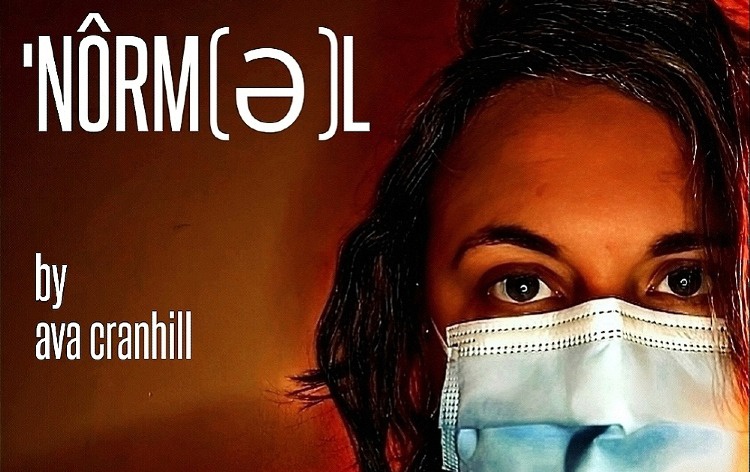
NÔRM(Ə)L
Ava Cranhill sits on a stool amid lamps without shades and sparkly Christmas lights. She holds the papers with her poem written on it and reads from it, and the gorgeous evocative language really immerses you in her experience of being diagnosed with Long Covid and all that it has stolen from her ever since. The piece is as much about the way that Cranhill is negotiating the telling of her story as it is about the story itself. You see her bursting with frustration in having her situation minimized by doctors, and strangers, and even people in her own life, and she speaks about the feelings of rage of being in this situation in the first place- both becoming sick, and then falling through both medical and societal cracks, and essentially losing everything, including the person she used to be. But she is aware that in order for audiences to connect with her she cannot come across as too bitter, too furious, to ready to blame folks for rushing back to work and school in person, for rejoicing in being able to go back into the grocery store without a mask on, for trying to pretend that the pandemic didn’t happen, when the pandemic is still very much a reality for her. Within the poem we see her trying to negotiate the balance, as exhausted and chronically ill as she is: how can she come across as endearing, and charming, relatable, and yes, even “normal,” so audiences won’t write what she’s communicating off as an inconvenient rare or extreme case, but instead think about where the limitations are in our community where real folks, our friends, our neighbours, are still being left behind. Read more at the link!