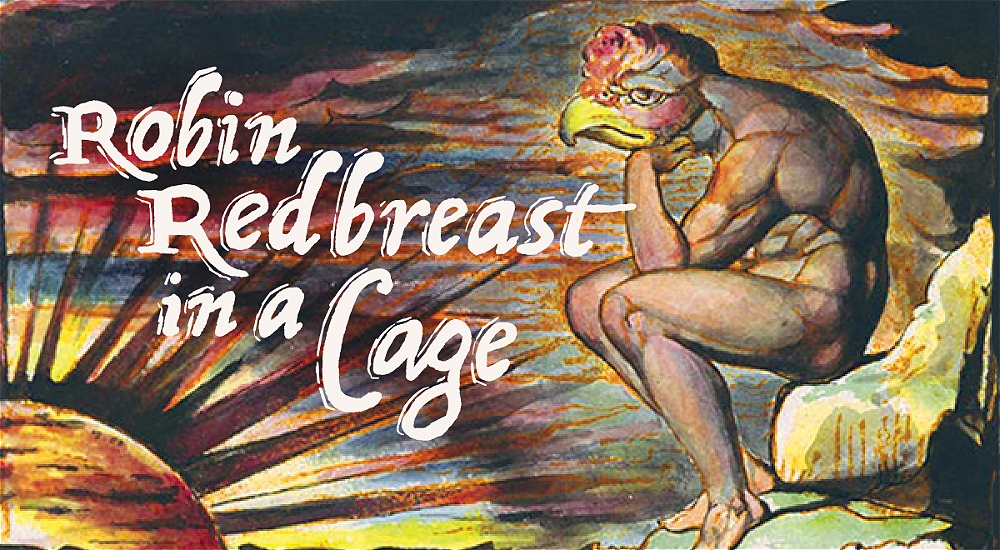
Robin Redbreast in a Cage
Fringe festivals often feel so comedy heavy that firstly I want to say how refreshing it is to get a proper drama theatre piece and boy does this one deliver. Highly abstract piece with top tier acting from young actors who clearly have received top training.
I thought the script writing was highly intelligent without belittling the audience, I felt invited into something beautiful and tragically poetic. This was my favourite show of the fringe thus far!
Acting was amazing (how did they get such good actors)!? Beautiful and thought-provoking show!
The show and the actors were great. It was such an amazing depiction of AI control and the ecological collapse. I was happy to watch the wonderful creative and meaningful work. I loved the minimalist stage design, while the AI lighting created such a powerful mood and transition. Truly a stunning production and performance!
Okay, so I went to Robin Redbreast in a Cage expecting a cute little fringe show, full of jokes and chaos like I usually love. And wow, totally not that. This show is wild, kinda confusing at times, but in the best way. The energy keeps flipping between camp and campus and the only hints are from the lights and sound. Sometimes it is funny, sometimes it hits hard, sometimes you are just like what is even happening. And somehow it all works.
The set is super minimal, just cubes, but honestly it does not matter because the actors carry everything. Every move, pause, and facial expression is on point and it pulls you completely into this bizarre world. Some moments make you laugh, some make you tense, some are lowkey beautiful. It is unpredictable and keeps you on your toes the whole time.
Did not expect this from a fringe show and it is still in my head. Clever, weird, funny, and kinda haunting. Makes you rethink what low budget fringe shows can actually pull off
Robin Redbreast in a Cage is climate theatre at its most thrillingly disorienting, a heady, hallucinatory journey that feels like Blake’s poetry set in the near future. From the very first scene, we are thrown into a survival show: Robin, starving in the wilderness, is played with astonishing physicality and vulnerability by a performer who makes you truly believe he’s on the brink of death, reality-TV style. The AI character, brilliantly portrayed (in person and through voice overs) by a versatile voice actor, brings both dark humor and chilling theatricality, while the crazy professor monologues, delivered with sharp promise by a young Ugandan actor, add delightful chaos to the narrative.
The plot is deliberately hard to follow, but that confusion is part of the fun. We watch Robin get dropped (hilariously) by an AI drone out of the campus biome perimeter into a world where the haze has been “rendered out.” Days pass, and he begins to hallucinate, visited by a forest spirit, only for the layers of reality to collapse further: he’s on TV, watched by his former mentors in a campus apartment module, who are themselves confronted by a shapeshifting AI android intent on scanning their unborn baby. As Robin pieces together why he was sentenced to this deadly “show,” we flash to the last dinner with his mentors, their marital tensions, and their desperate recruitment of him into resistance against the algorithm.
The show’s visuals are striking. The tableau with Pachamama and Sagarmatha is breathtaking; the Everest-climbing scene is mind-blowing, blending gorgeous blocking, minimalism, and surreal science fiction theatrics to evoke both awe and ecological reflection. Even as Robin’s forest spirit is captured by the AI and forced to drink its poisonous juice, initiating his death process, the performers maintain an uncanny tension: when Robin wakes to artificial life and a hollow “victory,” the suspense and absurdity hit simultaneously. The final summit push is an unforgettable climax, a vision that transcends the immediate story to comment on ecological suffering, false leaders, and tech overlords, punctuated by some of Blake’s most haunting lines.
The staging, lighting, and sound design are perfect companions to this chaos, supporting both intimate moments and expansive, almost hallucinatory vistas. The pacing drifts at times, but that seems deliberate, part of the show’s commentary on disorientation, survival, and the blurred boundaries between reality, media, and hallucination. Minimalist design, dark humor, and moments of pure theatricality (Google Home and all) make this a unique, immersive experience.